Halloween en 3C : de Samhain à la pêche aux pommes
Dans le cadre de leur cours de LCE, les élèves de 3ème C ont remonté le temps pour découvrir les origines d’Halloween et comprendre comment cette fête a évolué au fil des siècles.
Le chapitre a commencé par l’étude de Samhain, ancienne célébration celtique, avant de suivre les transformations de cette tradition en Irlande, en Angleterre puis aux États-Unis, jusqu’aux formes contemporaines d’Halloween.
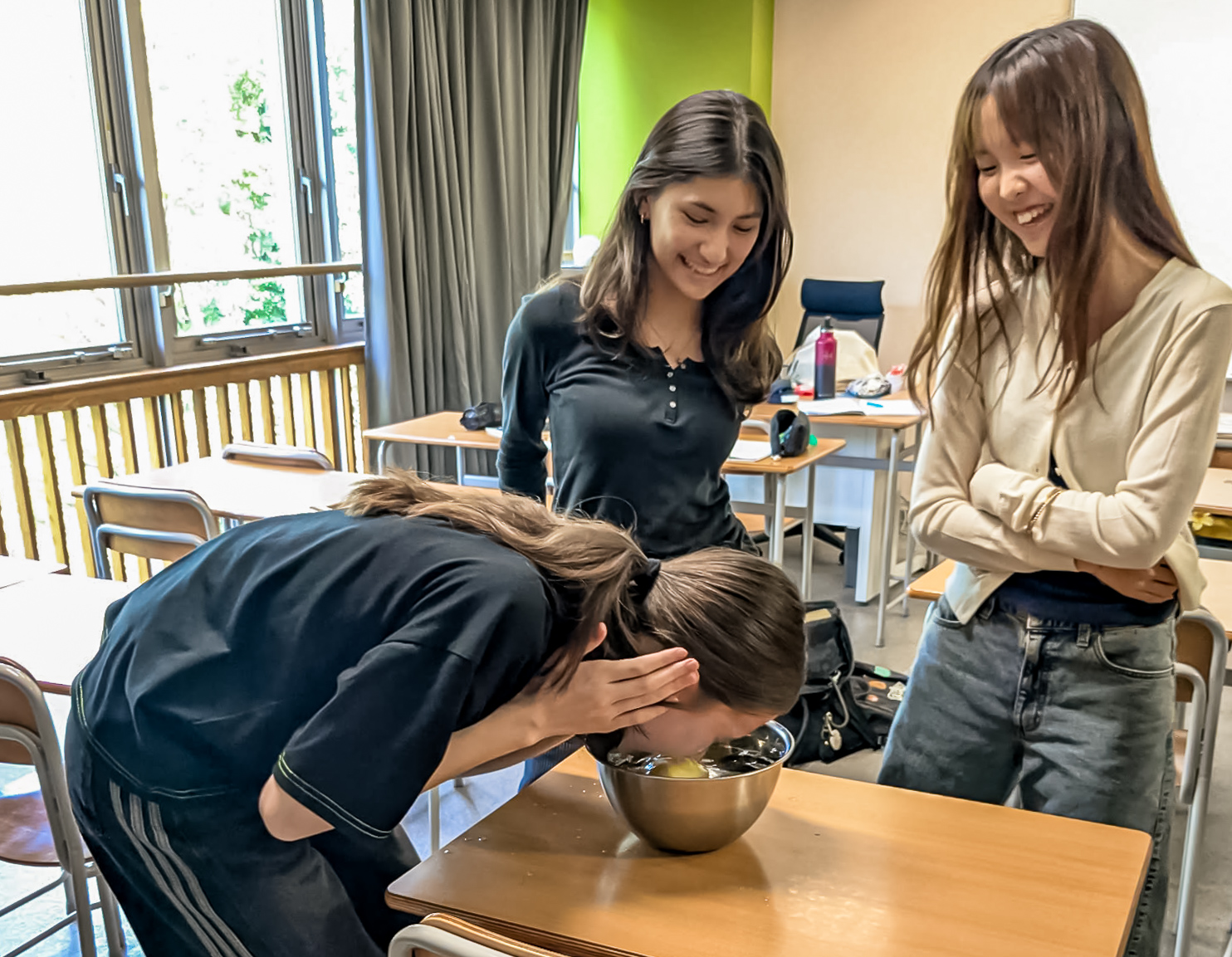
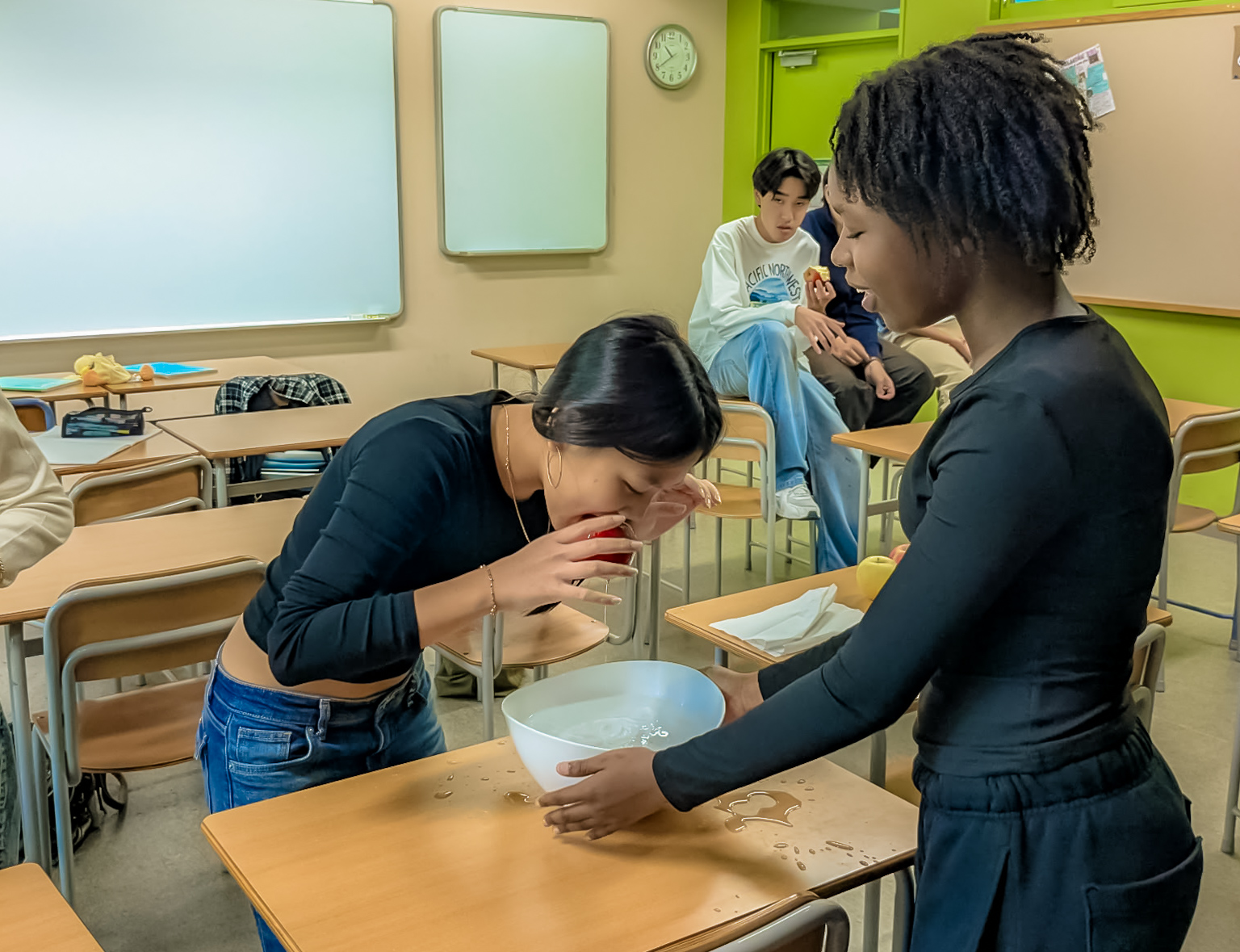
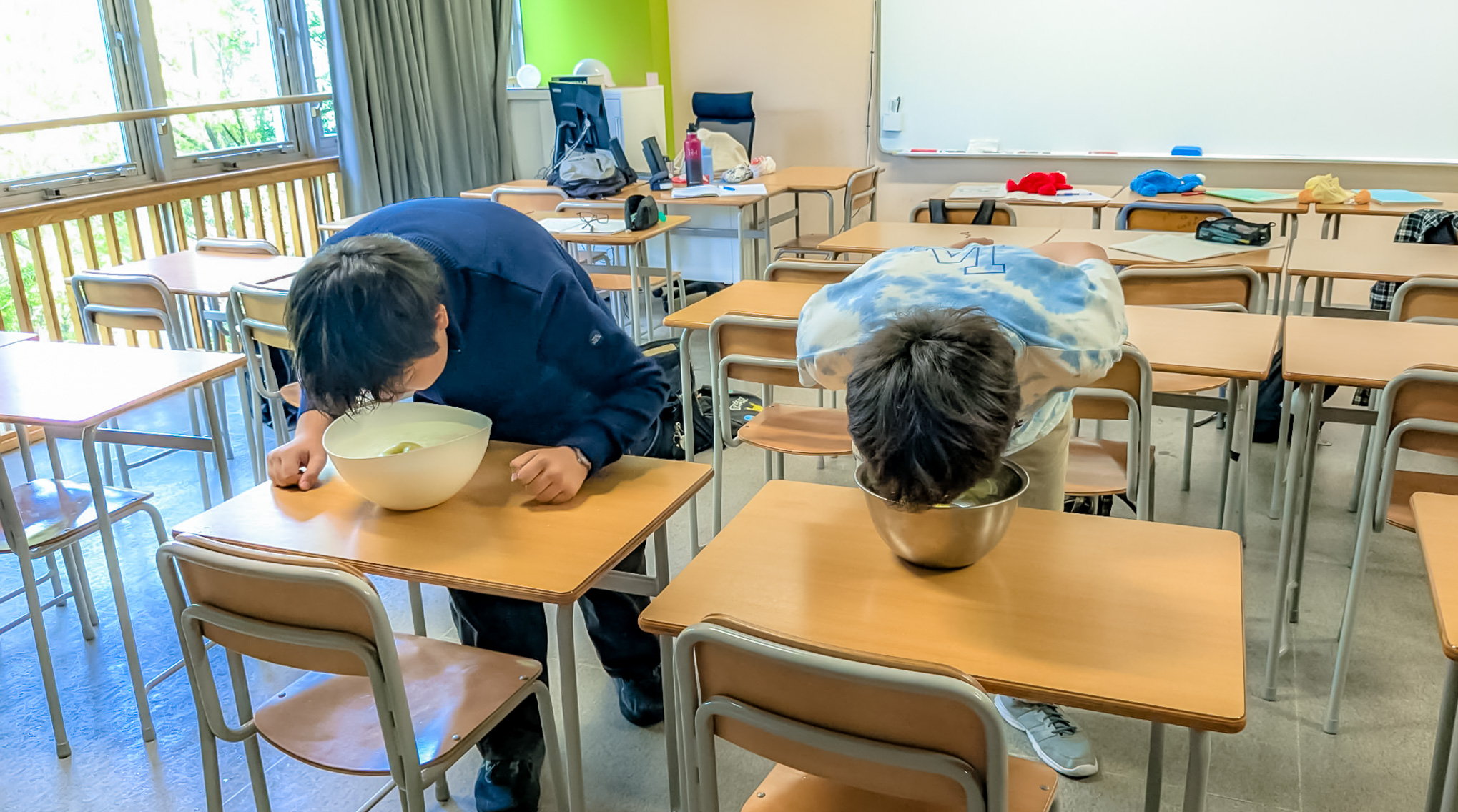
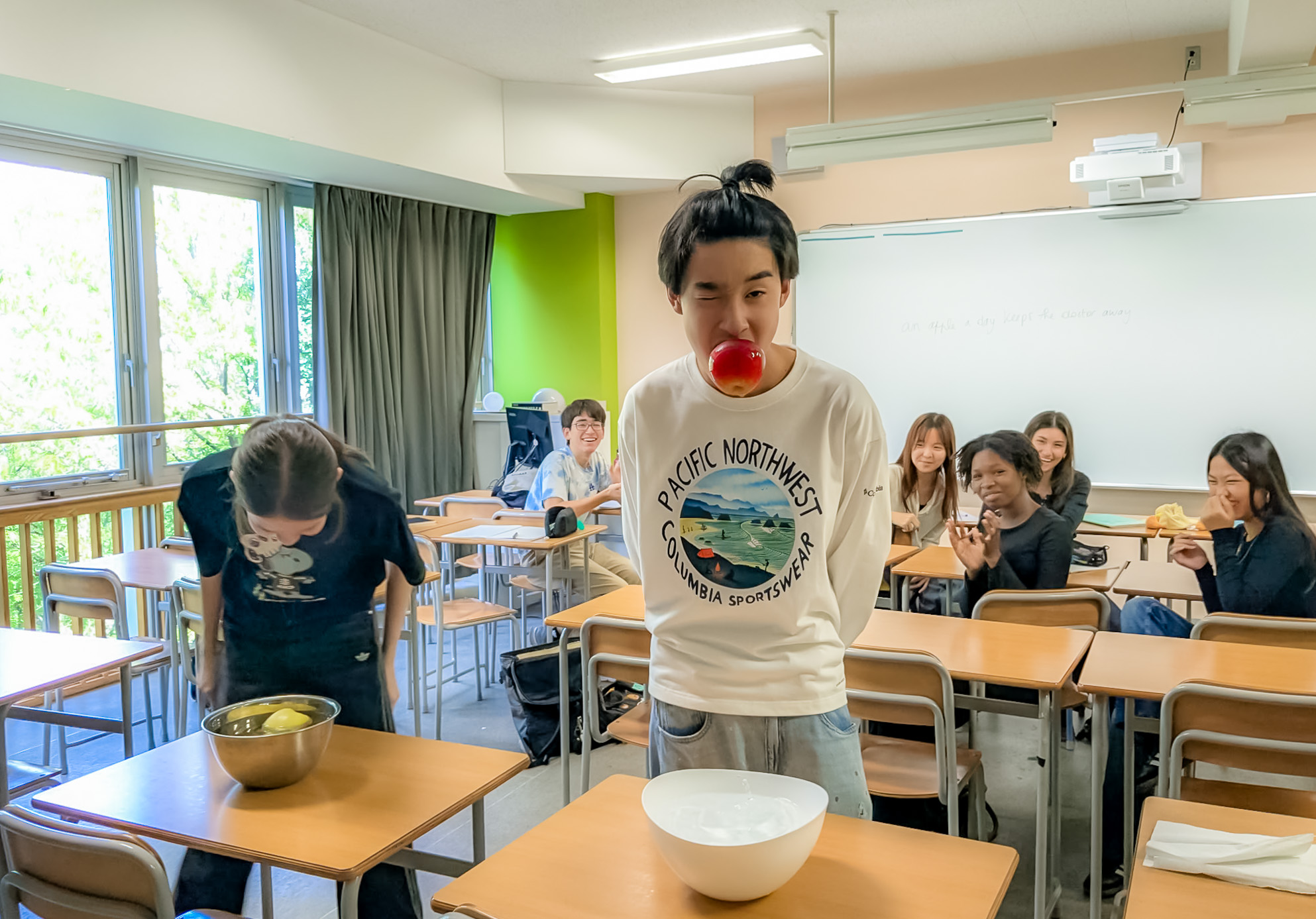
Pour clôturer cette séquence de manière concrète et ludique, les élèves ont profité de la journée consacrée à Halloween avant les vacances — et de la possibilité de venir déguisés — pour expérimenter en classe un jeu traditionnel : le « bobbing for apples », ou pêche aux pommes.
Le principe est simple, mais demande un peu d’adresse : des pommes flottent dans une bassine remplie d’eau et il faut parvenir à en attraper une uniquement avec la bouche et les dents, sans utiliser les mains.
Associée depuis longtemps aux célébrations d’automne dans les îles Britanniques, cette tradition a ensuite traversé l’Atlantique avec l’immigration irlandaise et s’est installée dans les pratiques d’Halloween aux États-Unis.
Et en classe ? Beaucoup de rires, quelques tentatives acrobatiques et, à la clé, une pomme pour les participants.
Une façon originale de terminer ce chapitre, en passant de l’histoire et de la culture à une expérience vécue. Et, pour une fois, Halloween s’est aussi célébré de manière plutôt « healthy » !
As part of their LCE class, 3C students travelled back through the history of Halloween to understand how the celebration has evolved over the centuries.
They first explored Samhain, the ancient Celtic festival, before looking at how these traditions developed in Ireland and England and eventually crossed the Atlantic to become part of modern Halloween celebrations in the United States.
To bring the unit to a lively conclusion, students took advantage of the Halloween-themed day before the holidays — costumes included — to try a traditional game in class: bobbing for apples.
The rules are simple: apples float in a basin of water and participants must catch one using only their mouth and teeth, with no hands allowed.
Long associated with autumn celebrations in the British Isles, the tradition later travelled to the United States with Irish immigration and became linked to Halloween festivities.
The result in class was exactly what one might expect: plenty of laughter, some determined attempts and, for the participants, an apple to take away.
A playful way to connect language learning, history and culture — and a rather healthy way to celebrate Halloween.
3eCのLCEの授業では、Halloweenの起源をたどりながら、この行事が長い年月の中でどのように変化してきたのかを学びました。
まず取り上げたのは、古代ケルトの祭り Samhain(サウィン)。そこからアイルランドやイングランドでの変化、さらにアイルランド系移民とともにアメリカへ伝わり、現在のHalloween文化へとつながっていく歴史を学習しました。
休暇前のHalloweenの日には、仮装も楽しみながら、単元の締めくくりとして伝統的な遊び 「bobbing for apples」 に挑戦しました。
水を張った容器に浮かべたりんごを、手を使わず、口と歯だけで取るというシンプルなゲームです。
秋の行事と結びついて長く親しまれてきたこの遊びは、アイルランドからアメリカへと渡り、Halloweenの楽しみ方の一つとして広がっていきました。
教室では笑い声がいっぱいに。苦戦しながらも、無事にりんごを手にした生徒たちはとても楽しそうでした。
歴史や文化について学んだことを、実際の体験につなげることができた今回の授業。Halloweenを楽しく、そして少し「ヘルシー」に締めくくりました。