Des latinistes sur les traces de Rome à Yamanashi
En 2013, des pièces de monnaie romaines ont été trouvées sur le site du château Katsuren à Okinawa.
Ces vestiges de l’empire romain en terre nippone ont incité les latinistes de 1re et Terminale à se lancer cette année dans un projet de recherches ambitieux : formuler des hypothèses solides sur le parcours suivi par ces pièces, depuis les provinces romaines jusqu’à l’archipel nippon, à travers les siècles.
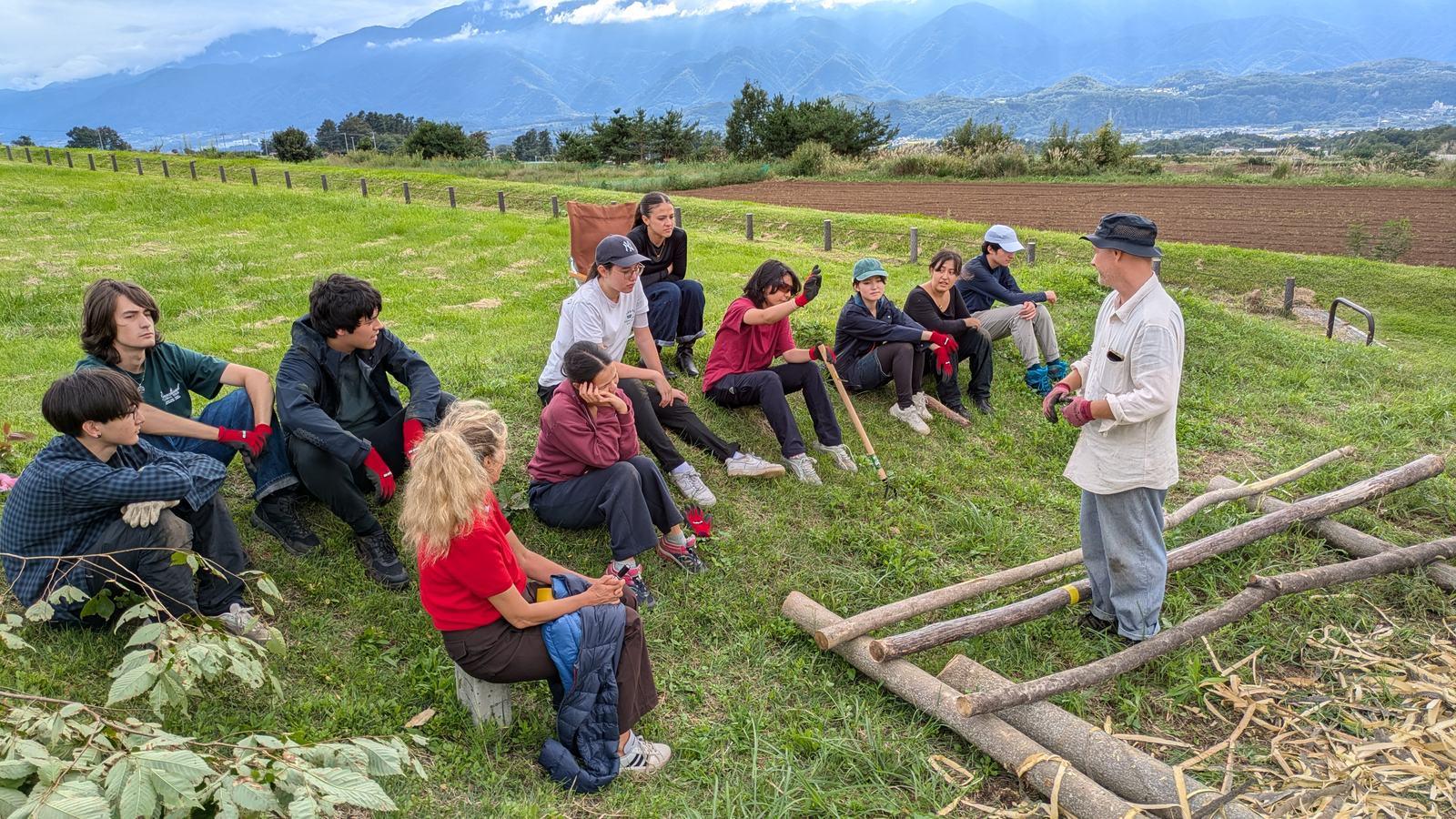
En complément de leurs recherches académiques, les élèves ont découvert l’archéologie de la façon la plus concrète qui soit : à genoux dans la boue. Encadrés par M. SANO, responsable des fouilles archéologiques de la préfecture de Yamanashi, et le Pr. ERTL de l’université Keio, ils ont pu participer pendant trois jours à un chantier de fouilles et découvrir les différents aspects de ce travail de terrain. Voici un aperçu de ce séjour : https://roma-no-koka.forge.apps.education.fr/
Les élèves présenteront leurs travaux lors des JFRL à Todai le 12 décembre : www.jfrl.org
From 28 to 30 September, Year 12 and Year 13 Latin students from the International French School in Tokyo left the classroom behind for a rather different learning environment: an archaeological excavation site in Yamanashi Prefecture.
The project began with a remarkable discovery. In 2013, Roman coins were unearthed at Katsuren Castle in Okinawa. How could coins originating in the Roman Empire have reached the Japanese archipelago? Which routes, exchanges and intermediaries might have brought them this far?
These questions form the basis of an ambitious research project undertaken by the students this year. By examining sources and comparing evidence, they are developing well-founded hypotheses about the journey these coins may have taken across centuries and continents.
In Yamanashi, this academic research became tangible. For three days, the students experienced archaeology in the field — sometimes quite literally on their knees in the mud.
Under the guidance of Mr SANO, who is responsible for archaeological excavations in Yamanashi Prefecture, and Professor ERTL of Keio University, they discovered the methods, precision and practical realities of archaeological fieldwork.
The experience gave a new dimension to their study of Latin and the ancient world. Observing, investigating, interpreting and comparing evidence allowed them to connect ancient history with contemporary archaeological research.
Back at school, the project continues. The students will present their work at the JFRL at Todai on 12 December.
Discover the project :
https://roma-no-koka.forge.apps.education.fr/
JFRL :
www.jfrl.org
9月28日から30日まで、東京国際フランス学園の高校1・2年生にあたるPremière・Terminaleのラテン語選択者が、山梨県で3日間の発掘調査に参加しました。
このプロジェクトの出発点となったのは、2013年に沖縄県の勝連城跡で発見されたローマ帝国時代の貨幣です。遠く離れたローマ世界の貨幣は、どのような経路をたどり、日本列島まで運ばれてきたのでしょうか。そこにはどのような交流や人々の移動があったのでしょうか。
生徒たちは今年、この謎をテーマに資料を調べ、さまざまな情報を照らし合わせながら、貨幣がたどった可能性のある道筋について考察を進めています。
山梨での3日間は、その研究を実際の考古学の現場につなげる機会となりました。時には泥の中に膝をつきながら、発掘作業を実体験しました。
山梨県の発掘調査を担当するSANO氏と、慶應義塾大学のERTL教授の指導のもと、生徒たちは発掘の方法や考古学調査に求められる観察力、正確さ、そして地道な作業について学びました。
ラテン語や古代史の学習が、実際の遺跡や現代の研究とつながる貴重な経験です。観察し、調べ、資料を比較し、そこから仮説を立てる。教室での学びが、より立体的なものになりました。
研究は今後も学園で続きます。生徒たちは12月12日、東京大学で開催されるJFRLにおいて、その成果を発表する予定です。
プロジェクトの様子:
https://roma-no-koka.forge.apps.education.fr/
JFRL:
www.jfrl.org